Introduction
The hardwood vs laminate flooring decision trips up a lot of homeowners, mostly because laminate has gotten so good at mimicking wood that the visual difference barely matters anymore. What actually matters is cost, durability, and how much upkeep you’re willing to deal with over the years. I’ve lived with both in different homes, and honestly, my opinion has shifted over time — laminate used to feel like a compromise, but it’s genuinely competitive now. This guide breaks down the real trade-offs so you can pick what fits your budget and lifestyle in 2026.
1. Upfront Cost Differences
This is usually the deciding factor for most buyers, and the gap between the two is significant.
Quick answer: Laminate flooring generally costs ₹60-150 per square foot in India, while solid hardwood flooring ranges from ₹250-600 per square foot depending on wood type — making laminate roughly one-third to half the cost upfront.
2. Durability and Lifespan
Hardwood, when maintained properly, genuinely outlasts laminate by a wide margin.
- Hardwood: can last 50+ years with periodic refinishing
- Laminate: typically lasts 15-25 years before needing replacement
- Hardwood can be sanded and refinished multiple times; laminate cannot
I’ve noticed people underestimate how much refinishing extends hardwood’s life. It’s not a one-and-done purchase like laminate — it’s more of a long-term investment that pays off over decades.
3. Moisture and Water Resistance
This is where laminate genuinely struggles, and it’s worth taking seriously in a country with heavy monsoon humidity. [link to related plumbing problems guide here]
Direct answer: Laminate flooring is significantly more vulnerable to moisture damage than hardwood, since water can seep into the core layer and cause swelling — making it a riskier choice for humid climates or monsoon-prone regions without proper sealing.
4. Maintenance Requirements
Picture a small business owner in Jaipur who installed hardwood in her boutique showroom — she now budgets for periodic refinishing every few years, which keeps the floor looking new but adds ongoing cost most laminate owners don’t have to think about.
- Hardwood: needs periodic polishing, refinishing, and careful cleaning products
- Laminate: low maintenance, just regular sweeping and occasional mopping
- Avoid excess water on both, though laminate is more sensitive to it
5. Look and Feel Underfoot
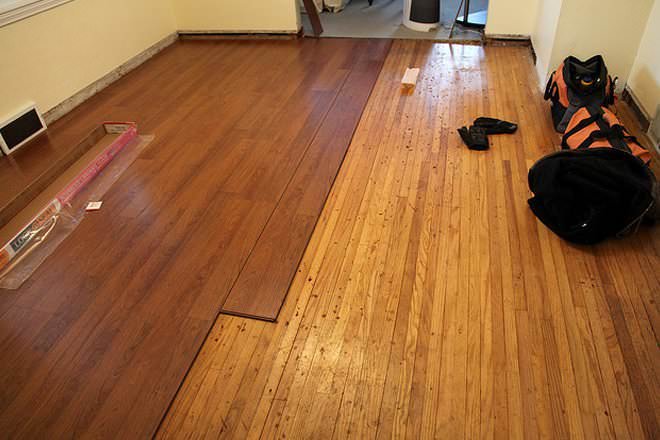
Genuine hardwood has a warmth and texture that’s hard to fully replicate, even with high-quality laminate. That said, I’ll admit modern laminate visuals have closed the gap significantly — most guests probably wouldn’t notice at a glance.
- Hardwood: naturally warm underfoot, unique grain patterns per plank
- Laminate: consistent, uniform appearance across the entire floor
6. Environmental Considerations
Hardwood, if sustainably sourced, is a natural, biodegradable material. Laminate contains synthetic layers that are less environmentally friendly at end-of-life. Has this factored into your decision at all?
7. Installation Complexity
Laminate is generally easier and faster to install, often suitable for a motivated DIY homeowner. Hardwood installation typically requires skilled labor and more time.
- Laminate: click-lock systems make installation relatively straightforward
- Hardwood: requires precise fitting, sometimes nailing or gluing to subfloor
- Laminate installation: usually 2-4 days for an average home
- Hardwood installation: often 5-10 days depending on complexity
8. Resale Value Impact
Hardwood flooring tends to add more perceived value to a home than laminate, particularly in higher-end real estate markets. [link to related increase home resale value guide here] That said, well-maintained laminate rarely hurts resale value significantly either.
Frequently Asked Questions
Q1: Which is better for humid climates, hardwood or laminate? Hardwood generally handles humidity better than laminate, though both need proper sealing and moisture management in monsoon-prone areas.
Q2: Is laminate flooring as durable as hardwood? Not quite — hardwood typically outlasts laminate significantly, especially with periodic refinishing, though laminate is more scratch-resistant day-to-day.
Q3: Can laminate flooring be refinished like hardwood? No, laminate cannot be sanded or refinished. Once damaged or worn, it typically needs full replacement rather than restoration.
Q4: Which option is more budget-friendly for a full home? Laminate is significantly more affordable upfront, making it the practical choice for budget-conscious renovations or rental properties.
Q5: Does hardwood flooring increase home value more than laminate? Generally yes, particularly in premium real estate segments where hardwood is seen as a higher-end material.
Q6: Is laminate flooring suitable for kitchens and bathrooms? Not ideal due to moisture exposure — vinyl or tile are generally better suited for these high-moisture areas than laminate.
Conclusion
The hardwood vs laminate flooring choice ultimately comes down to your budget and how long you plan to stay in the home. If long-term value and durability matter most, hardwood is worth the investment. If you need something budget-friendly and low-maintenance, laminate holds up well for most living spaces. Get samples of both before deciding — seeing them in your actual lighting makes the choice much easier.
Suggested Image Alt Text:
- “Solid hardwood flooring in a renovated living room”
- “Laminate flooring planks installed in a bedroom”
- “Comparison of hardwood and laminate flooring textures”