Introduction
Exterior painting looks simple until you actually start — then you realize why professionals charge what they do. Still, with the right DIY exterior painting tips, a motivated homeowner can pull off a genuinely good finish without hiring a full crew. I tried this myself on a small independent house a couple of summers back, and honestly, the prep work mattered far more than the actual painting. This guide walks through what actually makes the difference between an amateur-looking job and one that holds up for years, going into 2026.
1. Choose the Right Weather Window
Timing matters more than most people realize before starting an exterior paint job.
Quick answer: The best time for DIY exterior painting is during dry weather with moderate temperatures, ideally avoiding monsoon season entirely and extreme summer heat, since both humidity and excessive heat affect paint adhesion and drying quality.
2. Prep the Surface Properly (Don’t Skip This)
I’ve noticed most DIY paint jobs fail here, not in the actual painting. Surface prep is tedious, but skipping it shows within months.
- Scrape off peeling or flaking old paint completely
- Fill cracks and holes with exterior-grade filler before painting
- Wash the surface thoroughly to remove dirt, mold, and grease buildup
3. Prime Before You Paint
Skipping primer is one of the most common DIY exterior painting mistakes, especially on surfaces with patchy old paint or exposed plaster. [link to related home improvement ideas guide here]
Direct answer: Applying a quality exterior primer before painting ensures better paint adhesion, more even color coverage, and longer-lasting results — skipping this step often leads to patchy finishes and paint peeling prematurely within a year or two.
4. Choose Weather-Resistant Exterior Paint
Not all paint is created equal for outdoor use. Exterior-specific paints handle UV exposure, rain, and temperature swings far better than interior formulations.
- Look for paints rated for exterior use with UV resistance
- Weatherproof or elastomeric paints work well for regions with heavy monsoon exposure
- Budget roughly ₹200-400 per liter for quality exterior paint in India
5. Use the Right Tools for Different Surfaces
Picture a small business owner in Jaipur painting her shop’s exterior wall — she used a roller for the flat wall sections but switched to a brush for window frames and trim, getting a noticeably cleaner finish than using just one tool throughout.
- Rollers work best for large, flat wall areas
- Brushes handle trim, corners, and detailed edges better
- Sprayers save time on large surfaces but require more setup and skill
6. Apply in Thin, Even Coats
Has this ever happened to you — applying paint too thick, hoping to finish faster, only to end up with drips and uneven texture? Thin, even coats always look better than one thick, rushed layer.
Related reading: How to Choose Paint Color for Every Room
- Apply two thin coats rather than one thick coat
- Allow proper drying time between coats (check product label, usually 4-6 hours)
- Avoid painting in direct harsh sunlight, which dries paint too quickly and unevenly
7. Protect Surrounding Areas
Simple prep work here saves significant cleanup time later and prevents accidental paint on windows, fixtures, or plants.
- Cover windows, door frames, and fixtures with painter’s tape
- Use drop cloths to protect flooring or plants below the work area
- Remove or cover outdoor furniture and decor before starting
8. Know When to Call a Professional Instead
DIY works well for single-story homes and manageable surface areas. For multi-story exteriors requiring scaffolding, or surfaces with significant structural damage, it’s worth hiring professionals instead. [link to related roof replacement signs guide here]
Frequently Asked Questions
Q1: How long does DIY exterior painting typically take? For an average-sized home, expect 3-5 days including prep work, priming, and two coats of paint, depending on surface area.
Q2: What’s the biggest mistake people make with exterior painting? Skipping proper surface preparation — cleaning, scraping, and priming — which causes paint to peel prematurely within a year or two.
Q3: Can I paint over old, peeling exterior paint? No, peeling paint should always be scraped off first; painting over it leads to poor adhesion and quicker peeling of the new coat too.
Q4: What’s the best season for exterior painting in India? Post-monsoon and pre-summer months generally offer the most stable, dry weather conditions ideal for exterior painting projects.
Q5: How much paint do I need for an average home exterior? This varies by home size, but roughly 1 liter covers 100-120 square feet per coat — calculate total wall area before purchasing.
Q6: Is it cheaper to DIY exterior painting compared to hiring professionals? Generally yes, DIY can save 40-60% compared to professional labor costs, though it requires more time and physical effort.
Conclusion
Getting a professional finish with DIY exterior painting tips really comes down to patience during prep work and applying paint in thin, controlled coats. Rushing the process is where most amateur jobs go wrong. Set aside a proper weekend, gather the right tools, and tackle one wall section at a time — the results genuinely hold up if you follow the basics carefully.
Suggested Image Alt Text:
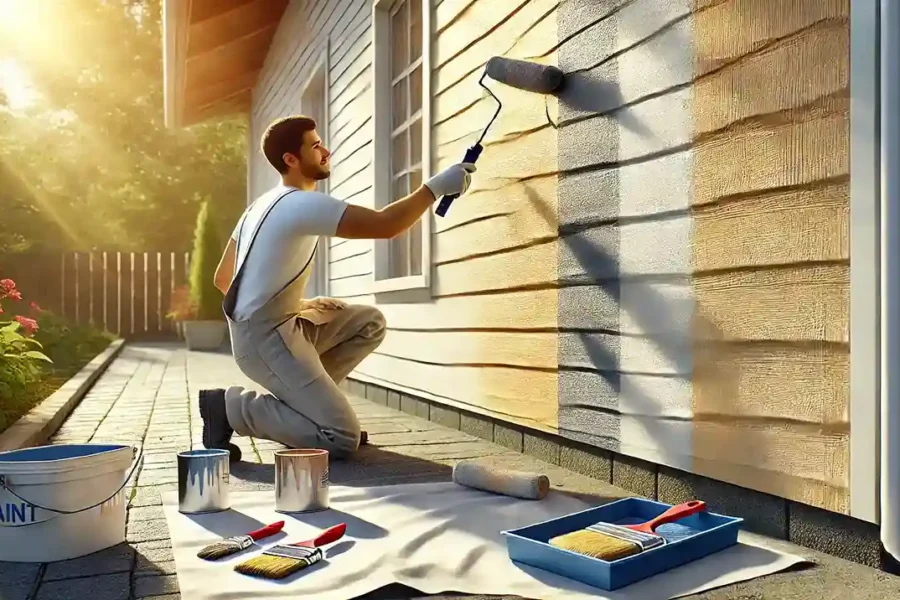
- “Homeowner applying exterior paint with a roller on wall”
- “Prepping exterior wall surface before DIY painting project”
- “Painter’s tape protecting window frames during exterior painting”
